Portfolio
CIT-QR
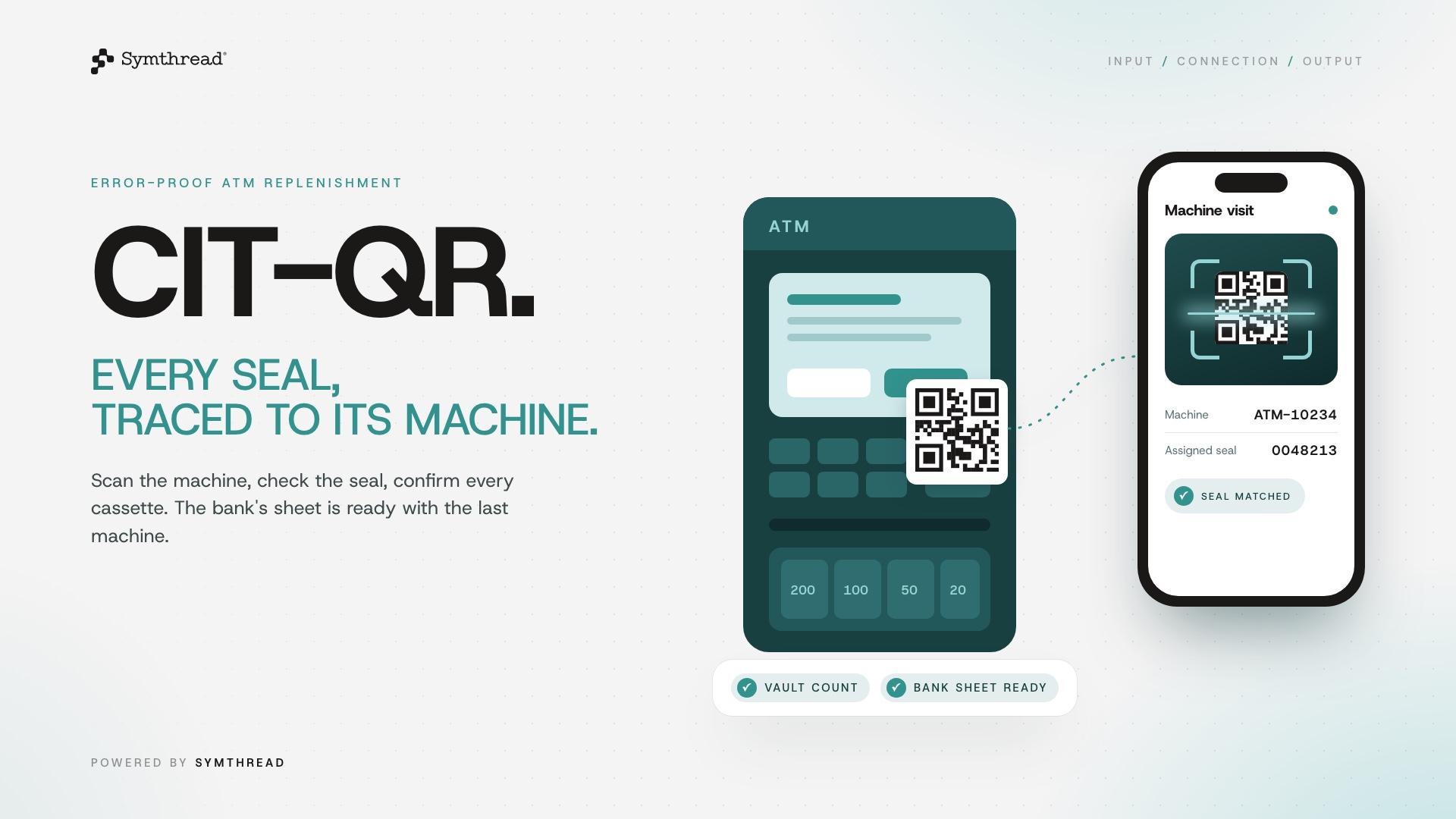
Error-proof ATM replenishment for cash-in-transit companies: a QR code on every machine, seals read by the phone camera, notes checked per cassette, and the bank's sheet ready the moment the last machine is done.
- Year
- 2026
- Stage
- In build
01 — Overview
What it is. How it works.
CIT-QR follows every bag of cash from the vault to the machine and back, and stops a mistake at the ATM instead of finding it days later at reconciliation.
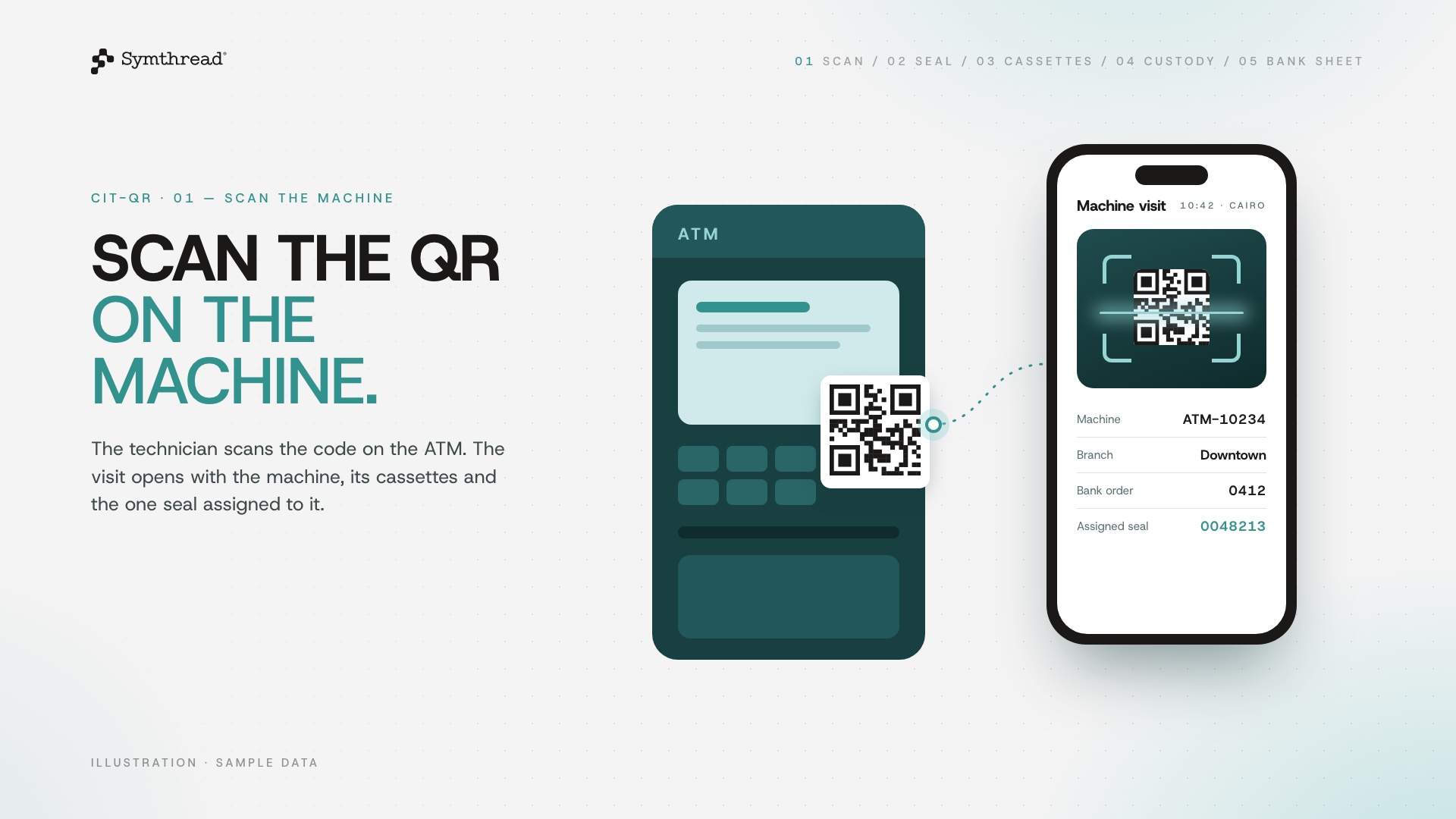
Scan the machine. The technician scans the QR code on the ATM; the app shows the machine and the seal assigned to it.
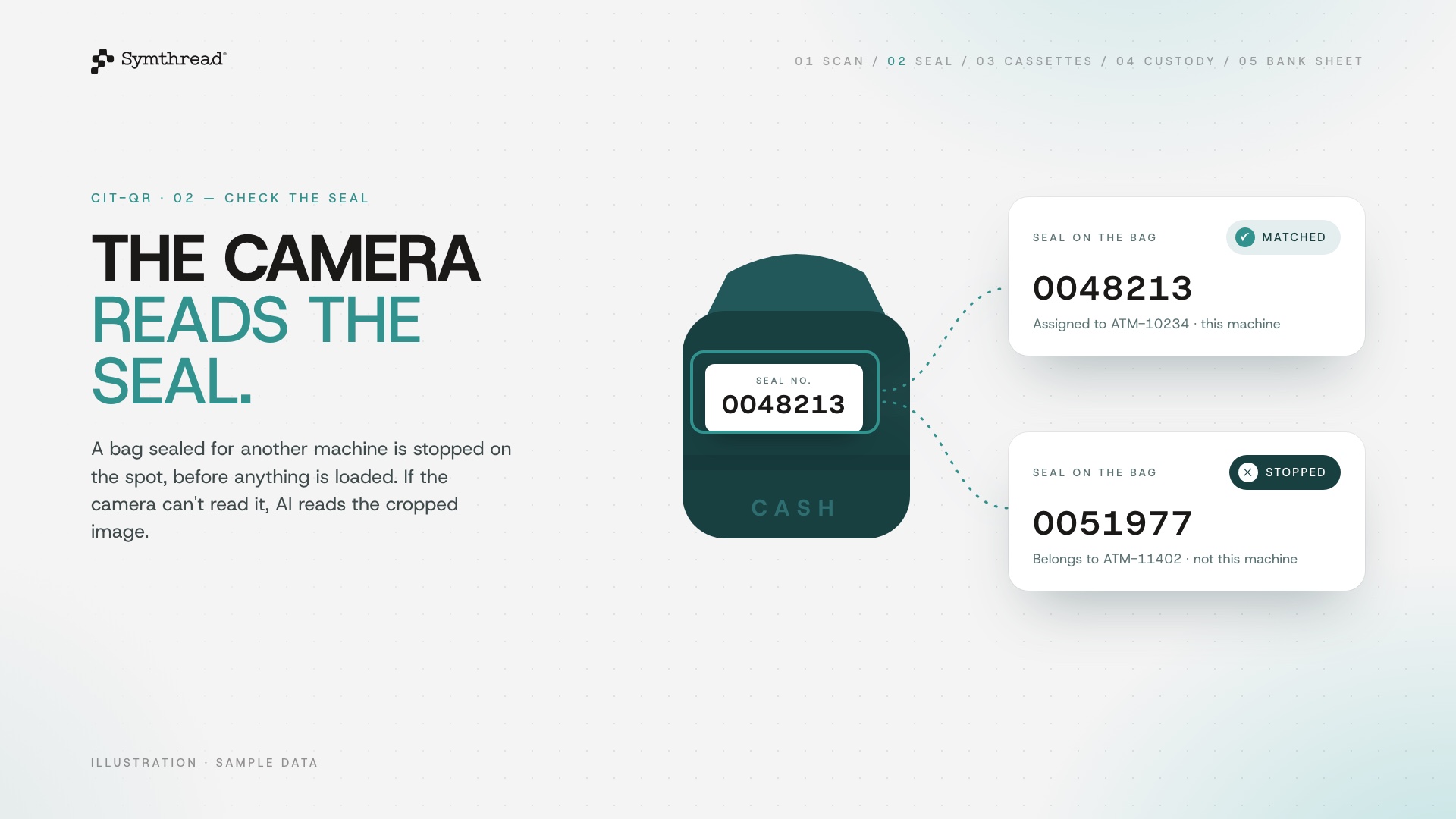
Check the seal. The phone camera reads the bag's seal. A bag meant for another machine is stopped on the spot. When the camera can't read it, AI reads the cropped image, and a typed entry is marked for review.
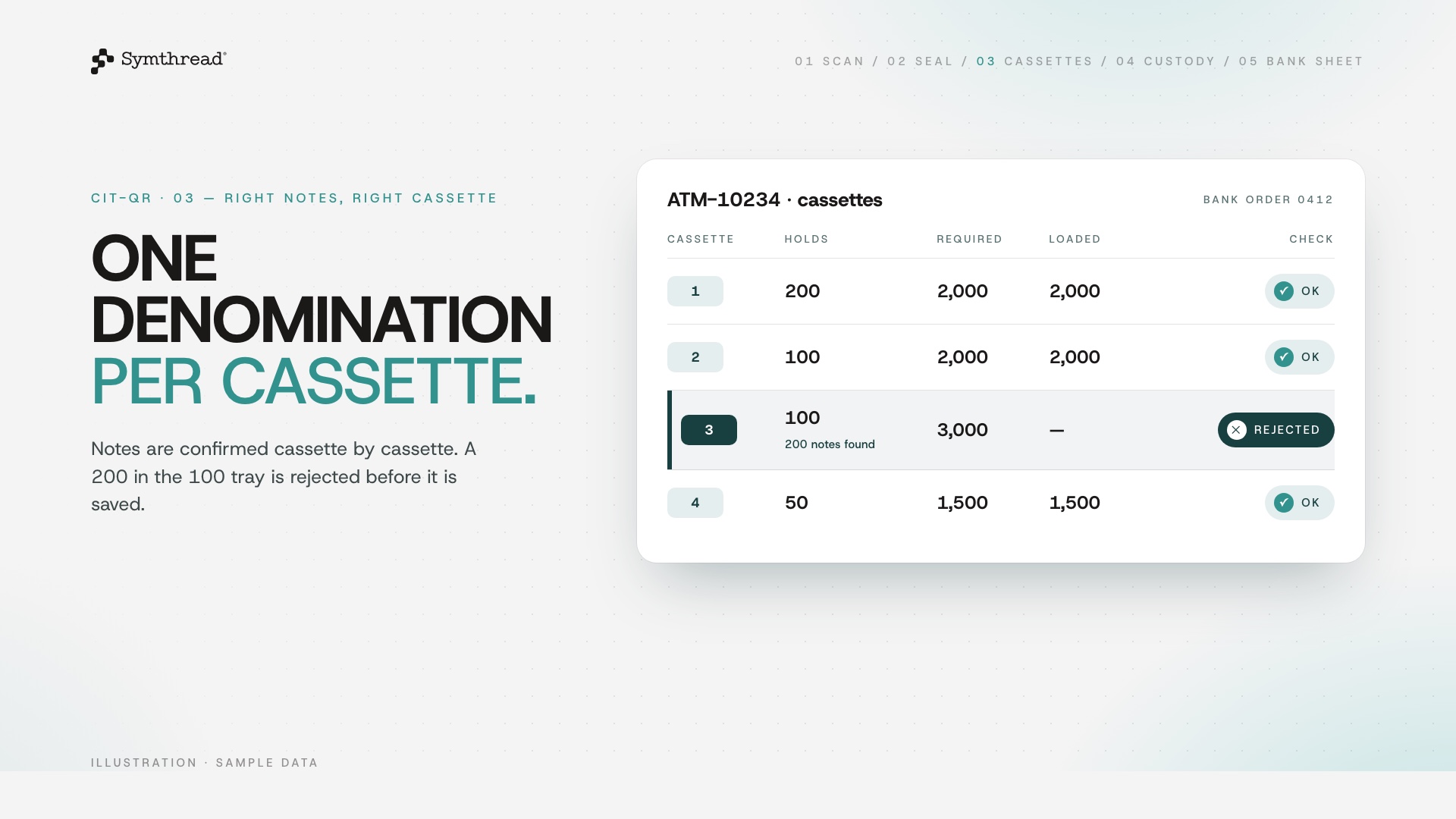
Right notes, right cassette. Each cassette holds one denomination. The technician confirms the notes per cassette, and a mismatch is rejected before it is saved.
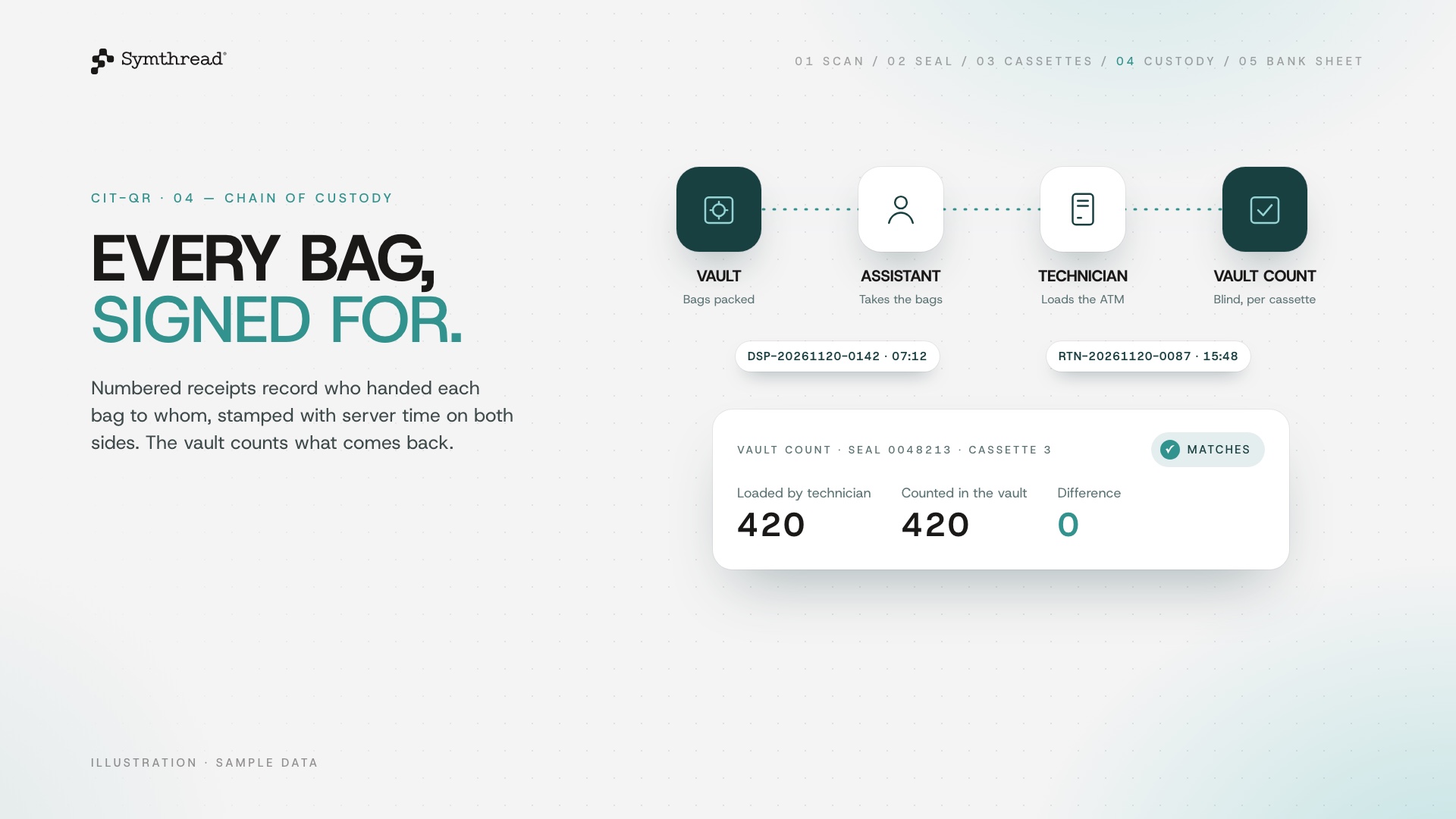
Chain of custody. Numbered dispatch and return receipts record who handed each bag to whom, stamped with server time on both sides.
Vault count. Returned bags are counted blind, cassette by cassette, and matched to what the technician loaded.
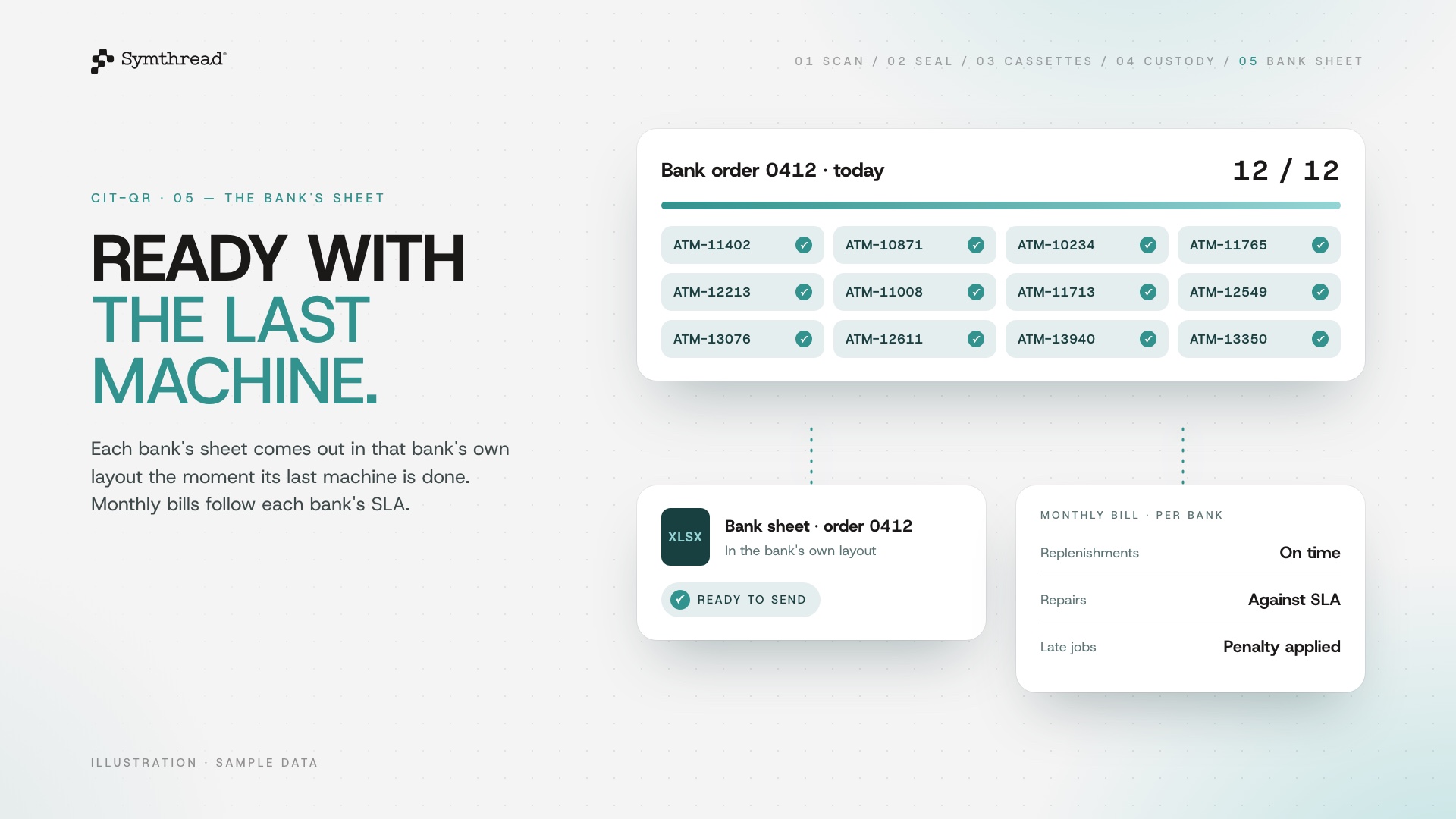
Bank sheet and billing. Each bank's sheet is generated in that bank's own layout as soon as its last machine is done. Monthly bills per bank list every replenishment and repair against the bank's SLA, with late penalties applied.
Every company runs its own organisation of regions, branches and positions, and each person sees only the machines, orders and counts in their scope.
02 — The problem
What it solves.
Replenishment still runs on paper and memory. Every day a technician feeds dozens of machines, and one mistake is enough: 200-pound notes in the 100 tray, and nobody notices until the reconciliation with the bank, days later.
Wrong notes in a cassette: stopped at the machine, before the cassette goes in.
A bag loaded into the wrong ATM: the form only opens when the seal matches the machine.
The bank's sheet waits for the trucks: it is ready the moment the last machine is done.
Time disputes: every record is stamped with server time, not the phone's.
03 — Demo
See it in action.
04 — Screenshots
Inside the product.
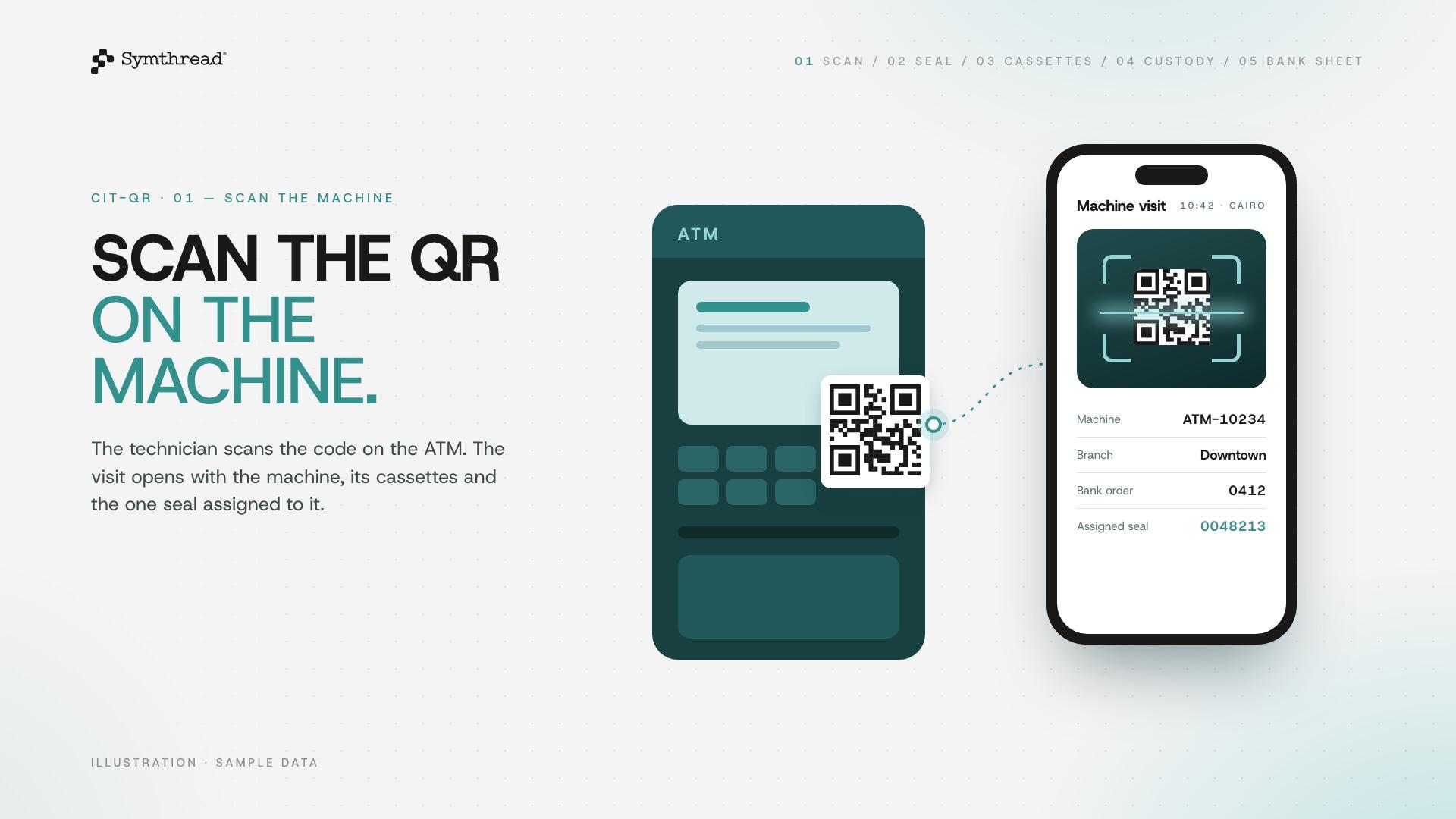
Scan the QR on the machine: the visit opens with the machine, its branch, the bank order and the assigned seal.
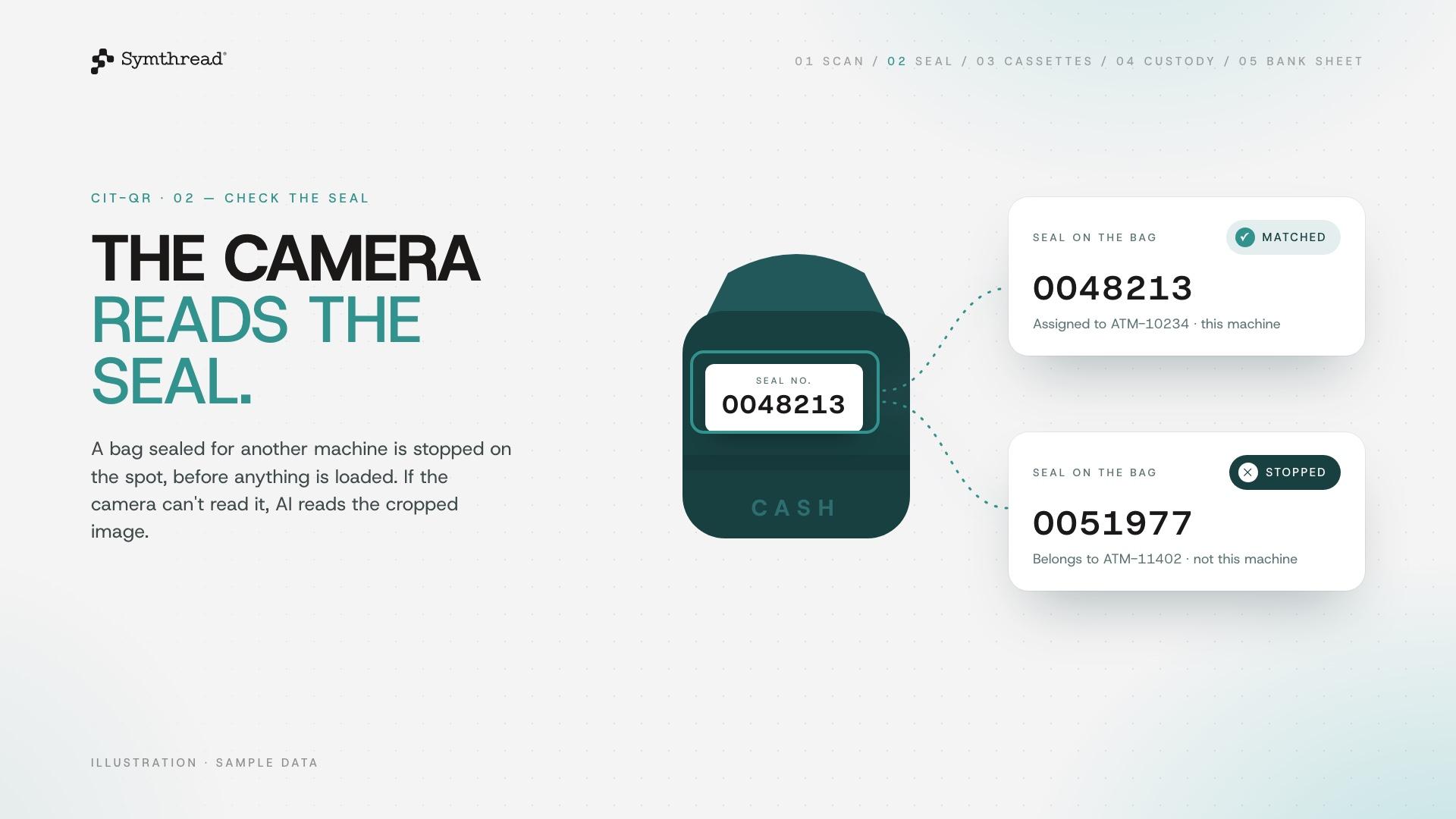
The camera reads the bag's seal: a matching seal is accepted, a seal from another machine is stopped.
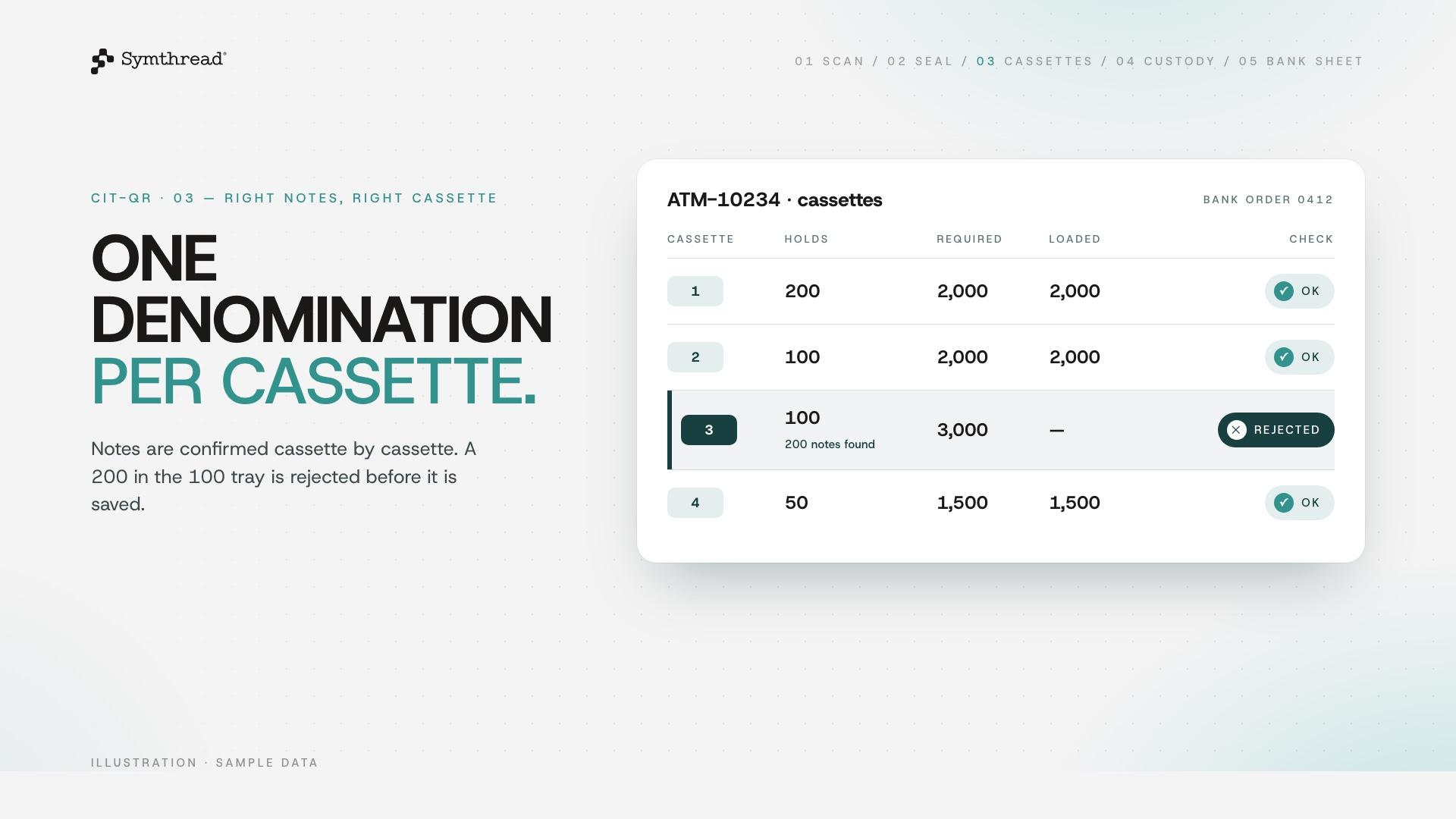
Notes confirmed cassette by cassette; a 200 in the 100 cassette is rejected before saving.
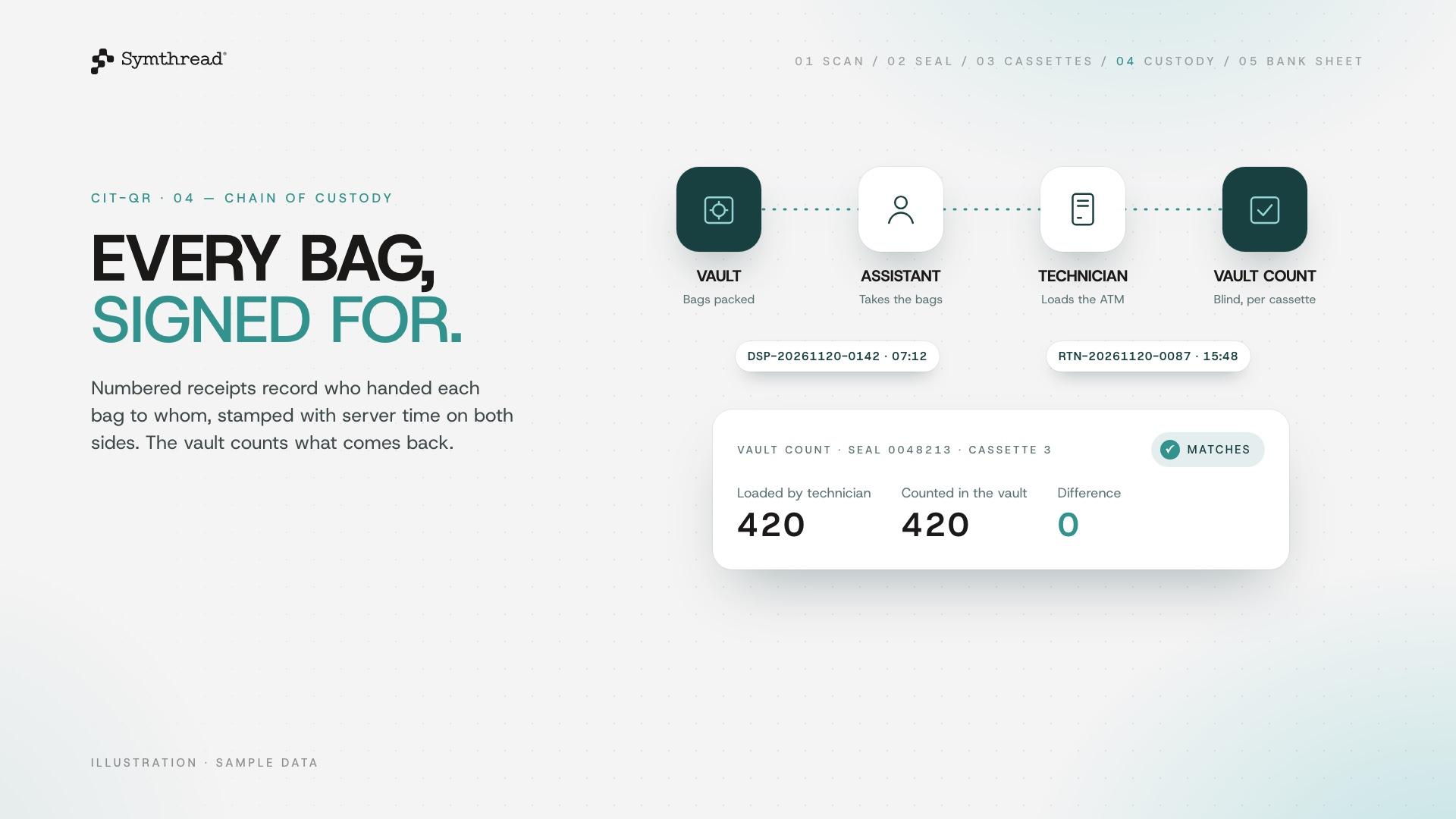
Chain of custody from the vault to the technician and back, with numbered receipts and a blind vault count.
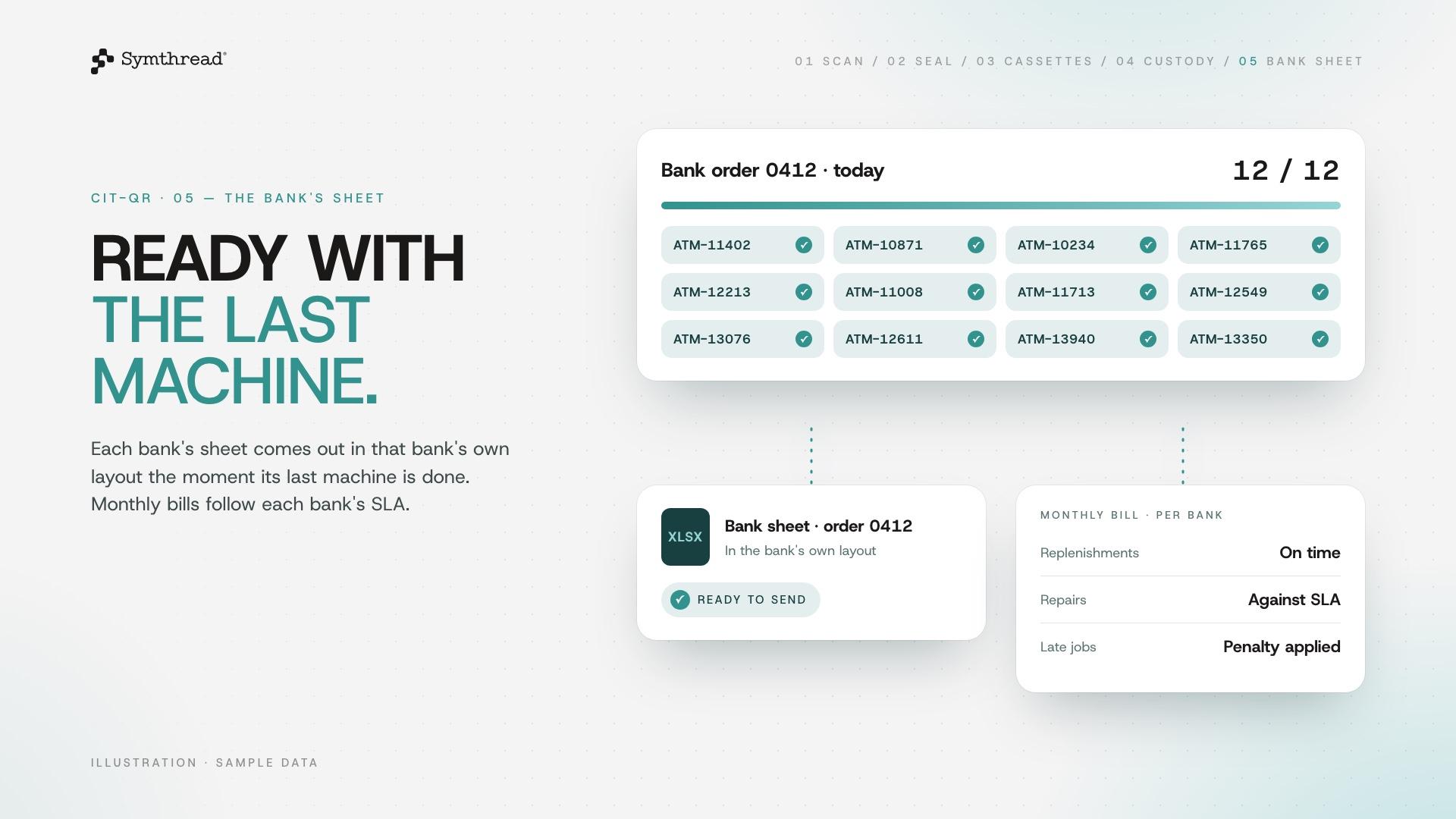
The bank's sheet is ready with the last machine, and monthly bills follow each bank's SLA.
05 — Built with
Built with.
06 — Next step